
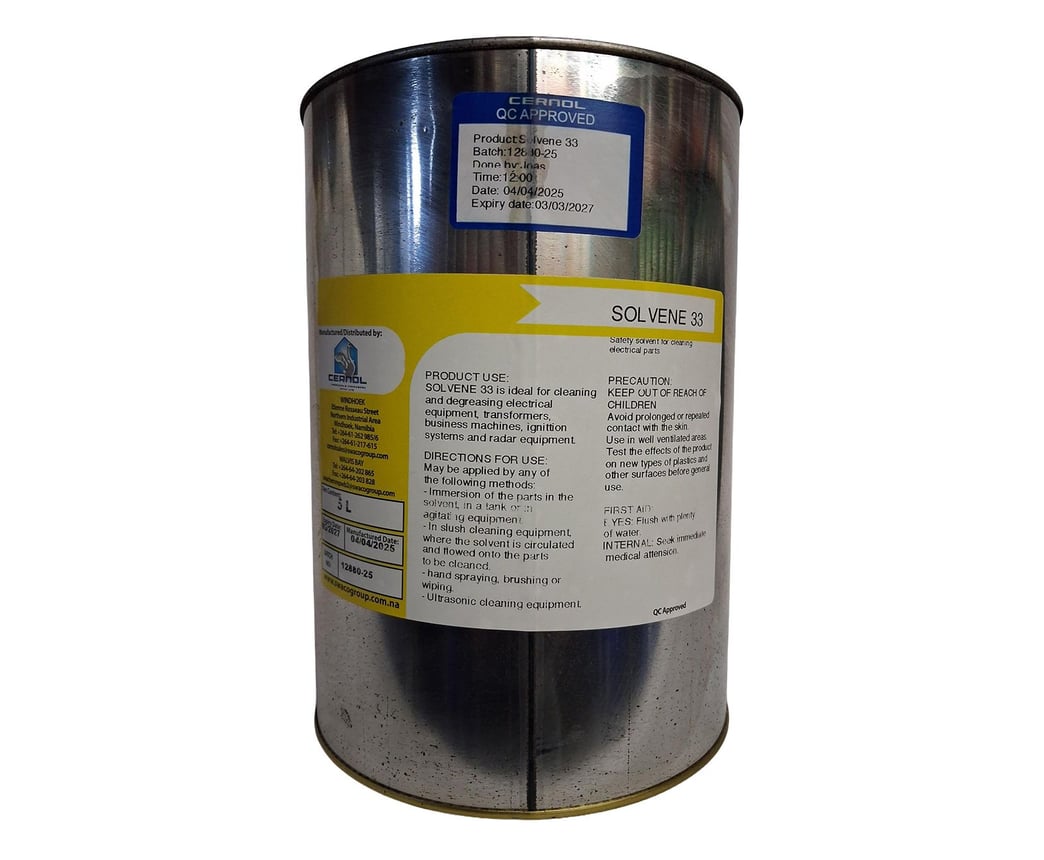
Solvene 33
SolveneTechnicalSolvent cleaner for electrical parts (liquid) — trucks, boats and fixed plant.
Available in5 L25 L
Available from: Windhoek & Walvis Bay agent
An engineering workshop’s electrical bench and precision work run on solvent: residue-free cleaning of contacts, windings, bearings and instrument parts. Solvene 33 and 44 — blended by Cernol in Windhoek and listed on the engineering segmentation sheet — put contact-cleaner performance in 25 L drums at a price that survives daily use.
Flammable-liquid storage and use fall under workshop fire regulations; we supply SDS and storage guidance sized to your solvent holding.
Decant into labelled pump bottles, not open tins — evaporation loss from open containers in Namibian heat quietly consumes more solvent than the actual cleaning does.
The lines engineering & workshops buyers draw from this category most.
Solvent cleaner for electrical parts (liquid) — trucks, boats and fixed plant.
Available in5 L25 L
Available from: Windhoek & Walvis Bay agent
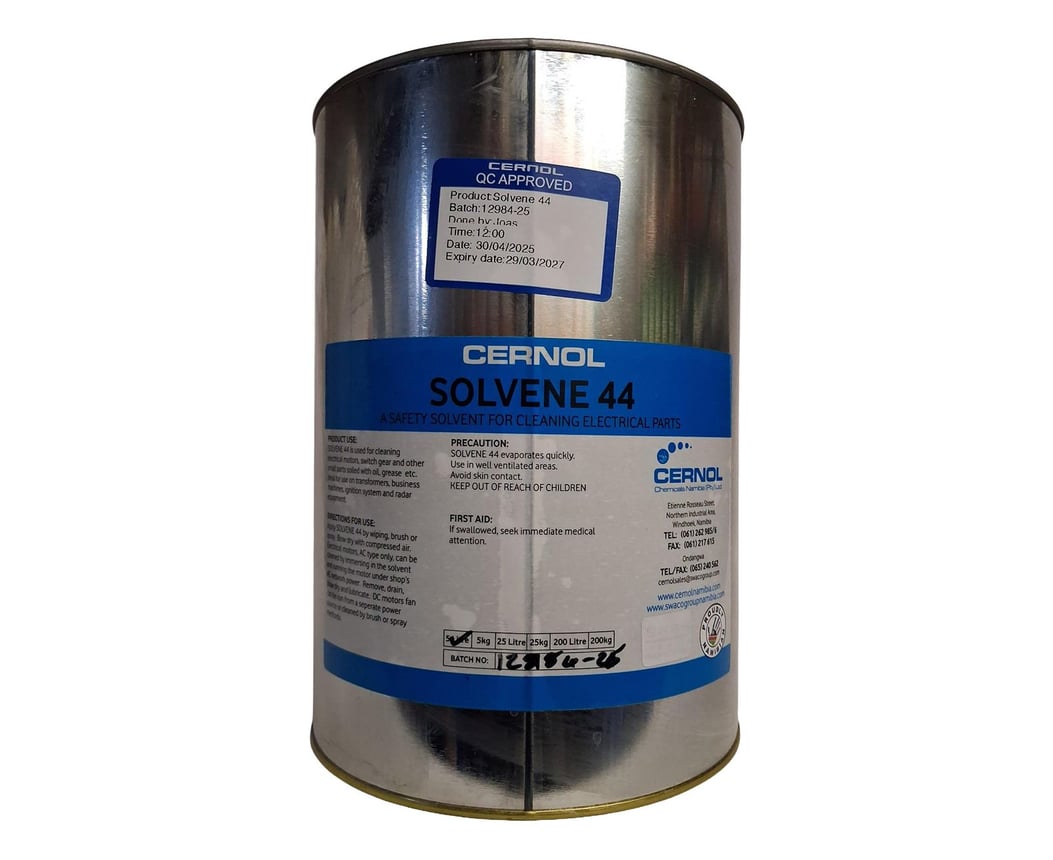
Fast-drying solvent cleaner for electrical parts (liquid) — minimal downtime before re-energising.
Available in5 L25 L
Available from: Windhoek
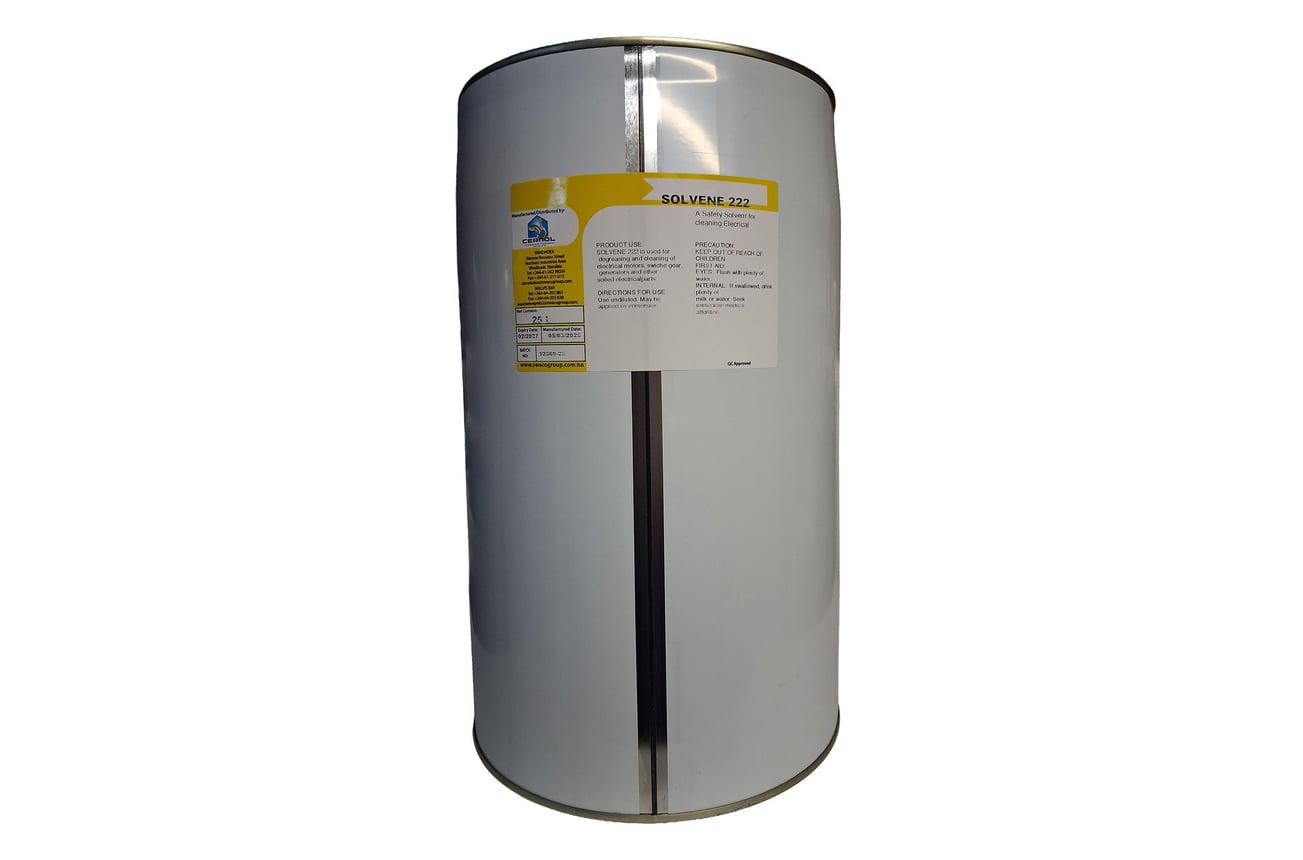
Solvent cleaner in aerosol format for spot cleaning and awkward access.
Available inAerosol5 L25 L
Available from: Windhoek
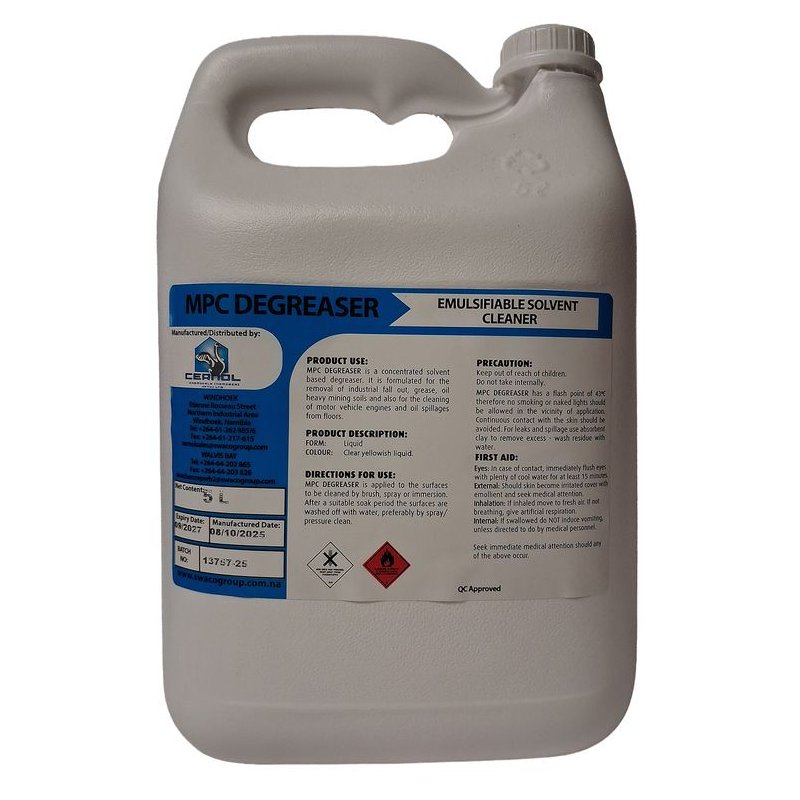
Multi-purpose degreaser for engine parts — the workshop standard across transport, mining and fishing segments.
Available in5 L25 L
Available from: Windhoek & Walvis Bay agent
Both, for different moments: Solvene 33 as the workhorse for routine contact, winding and component cleaning where a few minutes’ evaporation is acceptable, and Solvene 44 when the machine is wanted back on line immediately — its faster flash-off is the difference on breakdown work. Keep Solvene 222 aerosol in the site toolbox for spot jobs away from the bench. All three leave no conductive residue when allowed to evaporate fully.
Mechanically remove loose dirt first, then repeated light Solvene 33 applications with brushing — flooding a winding soaks contamination deeper instead of lifting it out. Allow complete evaporation (accelerate with low-heat drying per your rewind procedure) before insulation testing, because solvent still in the winding reads as a fault. For bearings, wash in solvent, dry, and oil or assemble immediately; a cleaned bearing left bare overnight starts corroding by morning.
At typical Namibian workshop consumption — a few litres a week across benches — a 25 L drum decanted into pump bottles runs at a fraction of aerosol cost per litre, commonly settling around one-fifth or better once exchange-rate-inflated aerosol prices are counted. The bigger saving is continuity: imported cans vanish off shelves during supply squeezes; the Windhoek-blended drum does not. Keep 222 aerosols only where the format genuinely earns its premium.
Treat vapours as heavier-than-air and flammable: work with cross-ventilation or extraction, never in a pit or enclosed corner without airflow, no ignition sources (grinding, welding, smoking) within the vapour zone, and containers closed between uses. Nitrile gloves, not latex. For large jobs — flushing a gearbox, washing a big frame — move the work to the open bay door. These are the same rules the mines apply; the physics does not care about the size of the workshop.
Cernol Chemicals Windhoek — Factory & Sales Office · Cnr Kallie Roodt & Etienne Rosseau Street, Northern Industrial Area, Windhoek · Tel 061 262 985 · Mon–Fri 08:00–17:00
Served primarily from Cernol Chemicals Windhoek — Factory & Sales Office — 061 262 985. SDS, grades and delivery scheduling included in the quote.