Hygiene chemistry for dairies, breweries and butcheries
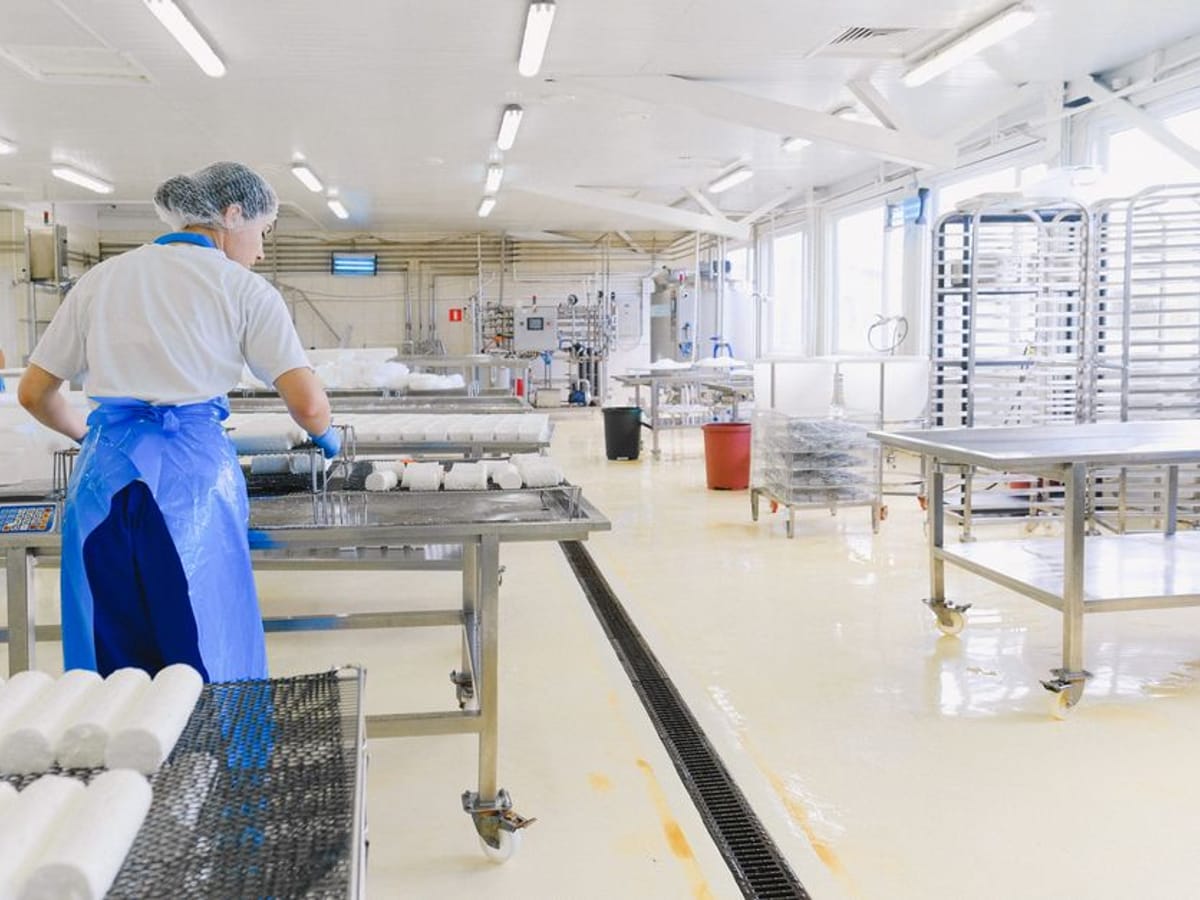
Namibia’s food producers — dairies, the breweries, town butcheries, Meatco-scale meat plants and poultry farms — run their hygiene on chemistry Cernol formulates in Windhoek: the 3-step alkaline → acid → sanitizer cycle, chlorinated cleaners for floors and equipment, and the smokehouse, pot-wash and hand-hygiene lines that complete a plant.
The problems we solve for this sector
- Milkstone and mineral films from hard water hiding bacteria on “clean” stainless
- Sanitizer resistance building where one chemistry runs for years
- Fat, protein and smoke residues in butcheries and smokehouses
- EU export-hygiene and audit documentation demands
- Workforce hand hygiene at production entrances
- Pots, pans and racks cycling through washing at production speed
On the ground in Namibia
- Namibian dairies and meat plants supplying export markets face EU-style hygiene inspection; Acidet on stainless before certification is established practice.
- Hard borehole water makes the acid-rinse step non-negotiable — milkstone builds faster here than the European manuals assume.
- Distance matters: a plant in Otavi or Gobabis cannot wait on imported chemistry, so local blending is a food-safety asset, not just a cost one.
Typical order: A dairy’s chemical order from the segmentation sheet: PSP Powder or Klenz 12 as the alkaline step, Acidet or Hydrosan as the acid step, Sypo or Tetramine 2008 as the rotating sanitizer, Chlordet 110 on floors and equipment, Chemkleen and Antisep 100 on the workforce side — with the standing instruction that the sanitizer be changed every six months because bacteria get used to it.
What food & beverage buys from us
Category guides written for this sector — the products, the Namibian conditions, and the questions buyers actually ask.
Dairy, Food & Beverage Hygiene for Food & Beverage
This is the heart of the relationship: the 3-step cycle — alkaline, acid rinse, sanitizer — that Cernol formulates in Windhoek and Namibian dairies, breweries and butcheries run every production day. The segmentation sheet spells the steps out product by product, and the plants that follow it pass their audits.
Sector guide →
Sanitizers & Disinfectants for Food & Beverage
A food plant’s sanitizer is a moving target: run one chemistry for years and the plant’s resident bacteria learn to live with it. Cernol’s answer — written into the Food & Beverages segmentation sheet — is the 6-month rotation between Sypo, Tetramine 2008 and Hydrosan, all blended at the same Windhoek factory so the switch is a stock change, not a supplier change.
Sector guide →
Hand & Skin Care for Food & Beverage
In a dairy, brewery or butchery the workforce’s hands are a food-contact surface with a pulse — and the segmentation sheet treats them that way, listing Antisep 100 for “factory and workforce” at the top of the food-industry column. Cernol supplies the hand-hygiene line that gets a Namibian plant through its audit and its winter.
Sector guide →
Kitchen & General-Purpose Cleaners for Food & Beverage
Around every Namibian food plant’s production hall sits the ordinary world — staff canteen, offices, ablutions, the yard — and the segmentation sheet covers it with the same four names as every depot in the country: Dishwash, Swan Pine Gel, Mrs Clean, Steripine. Cernol supplies the plant’s two worlds on one order, correctly separated.
Sector guide →
Hygiene Consumables & Dispensing for Food & Beverage
The Food & Beverages segmentation sheet ends with a hardware list — “Hygiene: brooms, double buckets with trolley, mops, dispensers etc.” — because chemistry without carriers is a promise without a plan. Cernol supplies the dispensers, colour-coded cloths and janitorial systems that make a Namibian food plant’s hygiene programme physically real.
Sector guide →
Food & Beverage supply: your questions answered
How does Cernol set up the 3-step cleaning cycle in a new plant?
We survey the plant: line lengths, tank sizes, water hardness, soil types and your audit regime. From that we specify the alkaline product per circuit (CIP vs open surface), the acid rinse and its frequency, the sanitizer pair for the 6-month rotation, dose rates and contact times — documented so the cleaning log satisfies inspectors. The chemistry then arrives from Windhoek on a standing order matched to your production calendar. It is the difference between buying chemicals and buying a hygiene system.
What should a butchery order beyond the dairy-style basics?
The meat-specific set: Arrest butchery degreaser for fat on floors and blocks, Chlordet 110 for equipment washing, Pansolv for pots, pans and racks at 50 °C+, Robust for high-foam scrubbing, Smokehouse Cleaner for the baked-on smokehouse layer, and Sypo or Tetramine 2008 as the rotating sanitizer. Every one of those names comes off the Food & Beverages segmentation sheet — it is the list Namibian butcheries actually run.
What hand-hygiene line does a food plant need at its entrances?
Three points in sequence: Chemkleen Clear at the wash basin — the disinfecting hand-soap grade dispensed at production entrances — paper towels from the consumables range, and Antisep 100 at the door as the final alcohol step. That entrance line is what inspectors watch first because it predicts everything else. Refill from bulk, log the refills, and repeat the setup at toilet exits; the segmentation sheet lists Antisep 100 for “factory and workforce” in exactly these positions.
How is machine dishwashing handled in a food-service or canteen setting?
With low-foam machine chemistry, not sink liquid: Excel is the chlorinated liquid detergent for dishwashing machines, run with Rinse Aid so crockery and glassware dry spot-free, while Dishwash stays at the pot sink. Brilliant powder covers machines that dose dry. Sink liquid in a machine floods it with foam and starves the pump — a service call we still see every year in Namibian canteens.
Serving Food & Beverage from our Windhoek branch
Cernol Chemicals Windhoek — Factory & Sales Office · Cnr Kallie Roodt & Etienne Rosseau Street, Northern Industrial Area, Windhoek · Tel 061 262 985 · Mon–Fri 08:00–17:00
Other industries we supply
Supplying food & beverage across Namibia
Primary branch: Cernol Chemicals Windhoek — Factory & Sales Office (061 262 985). Consolidated deliveries, SDS documentation and account facilities for the sector.